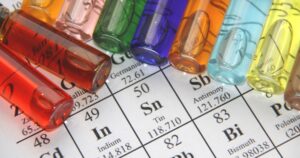
Transitioning from secondary school to junior college can feel like stepping into a different academic world, especially when it comes to Chemistry. Many students who performed well at O-Level are surprised by how demanding H2 Chemistry can be. While both syllabuses build on the same scientific foundations, the depth, pace, and expectations differ significantly. Understanding these differences early can help students adapt more effectively and make informed decisions about subject choices and support options such as JC H2 chemistry tuition in Singapore.
Curriculum Scope And Depth
O-Level Chemistry focuses on building foundational knowledge. Concepts are introduced in a structured and relatively contained manner, ensuring students understand core ideas such as atomic structure, acids and bases, and basic organic chemistry.
H2 Chemistry, by contrast, expands these ideas considerably. Topics are explored in greater depth, with a stronger emphasis on underlying principles rather than surface-level understanding. For example, while O-Level students learn trends in the Periodic Table, H2 Chemistry requires students to explain these trends using electronic structure, atomic size, and inter-particle forces. The syllabus also introduces more complex topics such as chemical energetics, reaction kinetics, and electrochemistry at a far more rigorous level.
Mathematical And Analytical Demands
At O-Level, mathematical requirements in Chemistry are relatively modest. Calculations tend to be straightforward, often involving mole ratios, simple titration data, or basic gas laws.
H2 Chemistry raises the bar substantially. Students are expected to manipulate equations confidently, interpret graphs, and apply mathematical reasoning to unfamiliar scenarios. Topics such as kinetics and equilibria often require multi-step calculations combined with conceptual explanations. Precision and logical structure in working are essential, as marks are awarded not only for the final answer but also for the method used.
Conceptual Understanding Versus Memorisation
Success at O-Level Chemistry often relies on accurate memorisation paired with clear procedural understanding. While conceptual clarity is important, many questions follow familiar patterns that reward recall and repetition.
H2 Chemistry places far greater emphasis on conceptual mastery. Memorised facts alone are insufficient. Students must understand why reactions occur, how conditions influence outcomes, and what assumptions underpin chemical models. Questions frequently test the ability to apply concepts to new contexts, making surface-level learning ineffective. This shift is one of the main reasons students seek structured guidance or tuition early in their JC journey.
Question Style And Examination Technique
O-Level Chemistry questions are generally direct, with clear cues indicating which concept or formula to apply. Structured questions guide students step by step, reducing ambiguity.
In H2 Chemistry, questions are often less explicit. Examiners expect students to identify relevant concepts independently and integrate knowledge across multiple topics. Data-based and application-style questions are common, requiring interpretation of experimental results or unfamiliar chemical systems. Clarity of explanation, logical flow, and correct use of chemical terminology become critical for scoring well.
Practical Work And Experimental Skills
Practical assessments at O-Level focus on fundamental laboratory skills such as titration, qualitative analysis, and basic observations. Marking tends to prioritise correct technique and clear recording of results.
H2 Chemistry practicals demand a higher level of scientific reasoning. Students must evaluate experimental reliability, identify sources of error, and suggest meaningful improvements. Planning questions may require designing experiments from scratch, demonstrating an understanding of variables, controls, and data interpretation. These skills mirror those used in university-level science courses, making practical work more intellectually demanding.
Time Management And Academic Pace
The pace of learning at O-Level allows for gradual consolidation. Topics are spaced out, giving students time to practise and revisit concepts before major assessments.
In junior college, H2 Chemistry moves rapidly. Multiple new concepts may be introduced within a single week, leaving little time for passive revision. Falling behind can quickly compound difficulties, as later topics often build directly on earlier ones. Effective time management, consistent revision, and timely clarification of doubts are crucial for keeping up.
Expectations Of Independent Learning
Secondary school Chemistry lessons tend to be more guided, with teachers providing structured notes and extensive practice questions aligned closely with examinations.
H2 Chemistry expects a higher degree of independence. Students are encouraged to read beyond lecture notes, synthesise information from multiple sources, and take ownership of their learning. Tutorials often focus on application rather than teaching content from scratch, meaning students must come prepared. This shift can be challenging for students unaccustomed to self-directed study.
Assessment Standards And Grading
Grading at O-Level is comparatively forgiving, with clear marking schemes and predictable question types.
H2 Chemistry operates under stricter marking standards. Explanations must be precise, and careless errors can significantly impact grades. The distinction between average and excellent answers often lies in depth of explanation and clarity of reasoning. As a result, even strong O-Level students may initially find it difficult to achieve top grades at H2 level without refining their approach.
Common Challenges Students Face
Many students underestimate the jump in difficulty from O-Level to H2 Chemistry. Common struggles include difficulty linking concepts across topics, confusion when faced with unfamiliar question contexts, and time pressure during examinations. These challenges are normal and do not indicate a lack of ability. With the right strategies and support, students can adapt and excel.
Preparing For The Transition Successfully
Early preparation makes a significant difference. Strengthening foundational concepts, practising analytical questions, and learning how to structure explanations clearly can ease the transition. Seeking guidance from experienced educators who understand common pitfalls can also be beneficial, especially in the early months of JC.
Conclusion
O-Level Chemistry and H2 Chemistry may share similar subject matter, but the expectations, depth, and skills required are markedly different. Recognising these differences allows students to adjust their study strategies, manage expectations, and seek appropriate support early. With consistent effort and the right guidance, H2 Chemistry becomes not just manageable but intellectually rewarding.
For students and parents looking for structured academic support and expert guidance through the junior college journey, Studious Minds offers resources and programmes designed to help learners build confidence, deepen understanding, and perform at their best. Learn more by visiting Studious Minds and exploring how the right support can make all the difference.